












Iran: Follow the Money (Chinese)
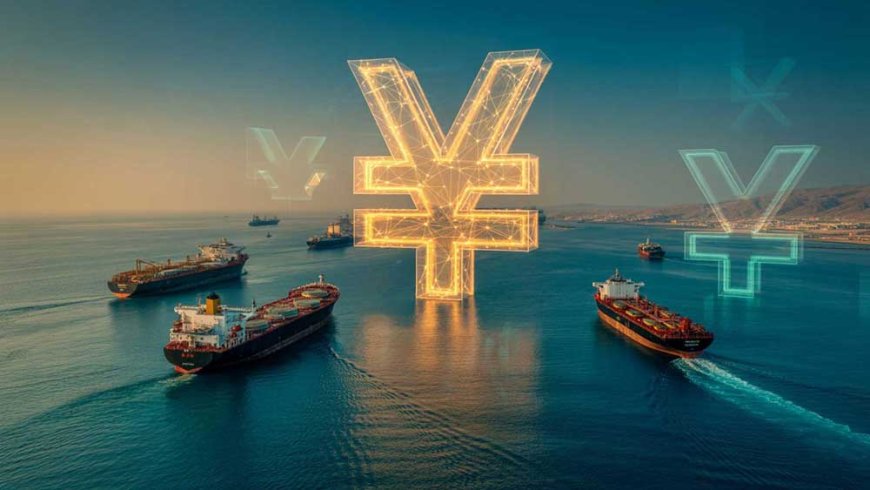
Iran accepts Yuan for Hormuz transit, bypassing US-controlled payment systems and accelerating digital multipolarism through China's e-Yuan currency. Iran shifts Hormuz tolls to Chinese Yuan, escaping SWIFT sanctions and positioning the e-Yuan as alternative to dollar dominance in global energy trade.
The Yuan as the New Currency of the Strait of Hormuz
A Geopolitical Paradigm Shift
The Strait of Hormuz, the vital artery through which approximately one-third of global oil transits, is witnessing a silent yet historically significant transformation. Iranian authorities have begun accepting payments in Chinese yuan for vessel passage—a decision that extends far beyond mere commercial convenience. This move represents an unequivocal signal: Tehran intends to escape American control over international payment systems while simultaneously engaging China as a direct guarantor of transactions.
The Dual-Objective Strategy
Iran pursues two interconnected strategic objectives. On one hand, eliminating dependence on US-controlled financial systems—SWIFT foremost among them—which Washington wields as a geopolitical weapon. On the other, binding China indissolubly to Iran's economic survival, transforming Beijing from a commercial partner into a de facto guarantor of Iranian stability. Anyone compelled to transit through Hormuz—by choice or necessity—must now engage with the Chinese currency, establishing a precedent that could extend to other strategic commercial corridors.
The E-Yuan: The Weapon of Digital Multipolarity
This evolution surprises no one observing China's technological advance in digital currencies. The e-Yuan represents the world's most mature Central Bank Digital Currency (CBDC) project, developed years before the West and other powers comprehended the strategic importance of this frontier.
Beijing explicitly conceived its digital currency as an alternative to the dollar in international trade, a financial instrument designed to materialize that "multipolarity" which constitutes the declared priority not only of China and Russia, but of a broad coalition of emerging economies.
The True Meaning of Multipolarity
Here, a widespread misconception must be corrected. Twenty-first-century multipolarism is not a reprise of the sphere-of-influence divisions characteristic of the Cold War, when physical territories were assigned to this or that superpower. The digital realm has abolished geographical borders: it no longer makes sense to manage a financial system based on physical banking networks for currency transfer when digital currencies enable operations across the entire planet without spatial limitations.
Iran appears intent on accelerating the timeline, exploiting the conjuncture of energy crisis and military tensions to hasten adoption of a model that permits management of international crises outside total American control. Washington indeed holds the "keys" that open and close the gates of the global banking system, capability it uses to implement selective sanctions and retaliations against countries deemed hostile.
The European Opportunity: The Euro/Yuan Partnership
At this juncture, an intriguing perspective emerges. European efforts to find exit routes from the energy crisis might discover in this evolution their diplomatic solution. The creation of a Euro/Yuan partnership for international energy transactions would represent a credible alternative to dollar dominance, with potentially destabilizing implications for the United States.
The Americans, too accustomed to exercising power in "muscular" terms, risk failing to grasp the subtleties of this transition. The management of international relations rests upon mutual trust, and when it comes to money, trust is everything. Washington has squandered portions of this capital through the instrumental use of sanctions, opening a space that Beijing—and now Tehran—are rushing to fill.
The New Geography of Power
The acceptance of the yuan in the Strait of Hormuz is not an isolated episode, but a foretaste of a reconfiguration of global financial architecture. In a world where the digital annihilates distance, power is increasingly measured not in terms of territorial control but in the capacity to guarantee reliable commercial flows uncontrollable by single powers.
Iran is betting that this transition can be accelerated by the pressure of contingent crises. If the wager succeeds, the Strait of Hormuz could become the laboratory where the multipolar system of the future is forged—a system where the yuan, and perhaps soon the euro, will compete to define the rules of the game, diminishing the dollar's role as the sole global reserve currency.
The game has just begun, but the signals are unequivocal: follow the money, and the money is flowing Eastward.
What's Your Reaction?








nextadmin
Welcome to Nexth.in, the ultimate remote control for your Universal INteractive direct link control (INCode).
Take control of your INteractive INternet INteractions. https://nexth.in