



















The Blackout you don't expect
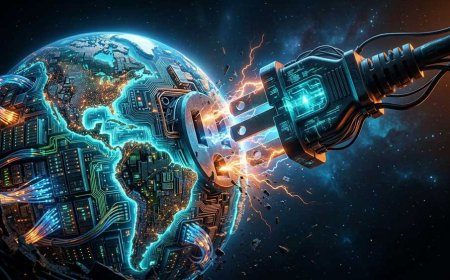
The Iran war is exposing a dangerous truth: AI depends on fragile energy infrastructure. Explore the risks of digital blackout, cascading failures, and a world without cloud. Data centers powering ChatGPT and cloud services consume 4.4% of US electricity. The Iran crisis is making that power scarce, expensive, and vulnerable. Here's what happens next.
I have to be honest: until a few years ago, when I heard about an "energy crisis," I mostly thought about higher bills and more expensive gas. I never really asked myself what would happen if the power stopped flowing not just to my home outlet, but to the mega-complexes that keep the internet, AI, and everything we take for granted today alive.
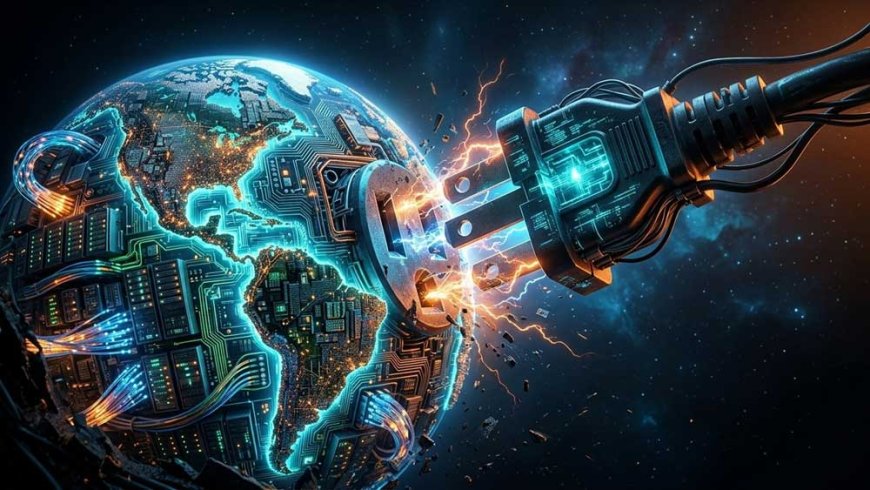
But the reality is that we're living through a moment when two worlds we thought were separate - energy and digital - have become dangerously intertwined. And the war in Iran, with all its consequences for global energy markets, is exposing the weak points of this interconnection.
The problem: data centers are very demanding "Energy Vampires"
In case you didn't know, data centers - those enormous warehouses full of servers that power ChatGPT, Google, Netflix, and pretty much everything else - are devouring electricity at staggering rates. In 2024, in the United States alone, they consumed 4.4% of all national electricity, and estimates say we'll hit 6-8% by 2028. In Europe, the situation is similar, with peaks of 20% consumption in some regions like Ireland.
But the real problem isn't just how much they eat. It's how they eat this energy.
Modern data centers, especially those dedicated to artificial intelligence, are like those appliances that trip your home breaker when you turn them on. A single AI server rack can consume 30-100 kilowatts, compared to 7-10 for a normal server. And these loads aren't constant: when an AI starts "training" or responds to millions of requests simultaneously, power consumption skyrockets in seconds.
This behavior puts the traditional electrical grid in crisis, which is designed for predictable and stable loads. Imagine driving a car that randomly accelerates and brakes - that's how the power grid feels facing these demand "spikes."
The hidden fragility: when protection becomes the problem
Here's where a counter-intuitive aspect comes in. Data centers are full of sophisticated protection systems. When they detect a voltage drop or fluctuation, they automatically disconnect from the grid to protect precious hardware, switching to batteries and emergency generators.
On paper, it makes sense. But in practice? It becomes a nightmare when it happens to many data centers at the same time.
Take what happened in Virginia in July 2024 - one of those episodes that should open our eyes. A voltage fluctuation, nothing dramatic in itself, triggered the protection systems of 60 data centers simultaneously. Result: 1,500 megawatts of power were "thrown off" the grid in one shot. The local power company had to scramble in emergency mode to prevent the blackout from spreading across the entire region.
Virginia, by the way, is the beating heart of the internet: that's where the so-called "Data Center Alley" is located, with more data centers concentrated there than anywhere else in the world. If that area goes down, it's not a local problem. It's a global problem.
The middle east case: when war hits the servers
But back to the Iranian crisis, which is why I'm writing this piece. What's happening in the Persian Gulf is no longer just a matter of oil or gas prices.
In March 2026, for the first time in history, Amazon Web Services data centers - infrastructure owned by an American company, used by clients from all over the world - were hit and damaged by drone attacks in the United Arab Emirates and Bahrain. Four facilities, all in areas that were considered "safe" until shortly before.
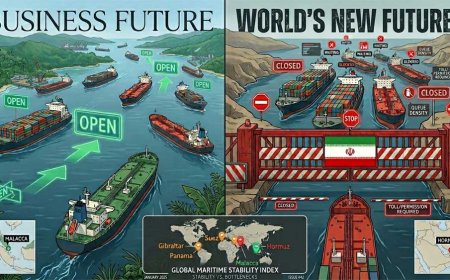
This is a paradigm shift. Data centers are no longer just civilian infrastructure: they've become legitimate military targets. And when the blockade of the Strait of Hormuz causes European gas prices to spike 20% in a few weeks, you realize that the energy crisis is no longer an abstract threat. It's already biting.
The hotspots: where risk is highest
If I had to point out the most at-risk zones today, my list would be this:
Virginia, USA – The world's neural center for data centers. Too many eggs in one basket, increasingly stressed power grid, and a worrying dependence on natural gas.
Texas – Paradoxically rich in energy (oil, gas, wind), but with a power grid isolated from the rest of the United States (the infamous ERCOT). When extreme heat or cold hits, data centers risk being disconnected from the grid to save domestic consumers. It's already happened, and the rules are getting stricter.
Middle East – Beyond the direct war risk, there's the cooling issue: data centers in the desert consume absurd amounts of water and energy to keep from overheating. In an energy crisis, they become unsustainable.
Europe – Especially Germany, the Netherlands, Ireland. After cutting ties with Russian gas, Europe is more dependent than ever on LNG imports, which pass right through the Persian Gulf. If that route is interrupted, European data centers become vulnerable.
What would really happen? Three possible scenarios
I've tried to imagine what it would mean for us, as a society, to have a prolonged crisis hitting this infrastructure.
Scenario 1: The "Digital Blackout" (a few days)
Imagine waking up and discovering that nothing works: ATMs frozen, banking apps inaccessible, medical appointments cancelled, GPS not updating, Amazon not delivering. Not for an hour, but for days.
Economic damages run into hundreds of billions. But the worst damage is to trust: if digital services can disappear so easily, our dependence on them becomes an unacceptable risk. We'd see a massive return to cash, paper, analog processes—with all the inefficiency that entails.
Scenario 2: The "Slow Agony" (months or years)
Perhaps more likely: service quality gradually deteriorates. AI becomes slower, dumber, because data centers don't have enough energy to run large models. Cloud costs rise, excluding small businesses and individuals. A "digital energy divide" is created: those in areas with stable power grids have access to advanced services, those who don't, get left behind.
Scenario 3: The "Renationalization"
The crisis pushes governments to take control. Data centers become strategic military infrastructure, protected and managed by the state. Strict rules are imposed on where data must stay (only within national borders), and the internet fragments into regional blocs that don't communicate well with each other. We return to a more closed, more controlled, less global world.
The problems we don't see
There are things that escape us, but that sector experts know well.
Diesel backup generators, for example. They're the industry standard, but they have limited autonomy (typically 24-48 hours) and depend on a fuel supply chain that can be interrupted. Plus, in many areas there are legal limits on how long they can run (in Virginia, 100 hours per year) to limit pollution. In a prolonged crisis, they're not enough.
Then there's the problem of electrical transformers - those big gadgets that transform high voltage into usable current. New, enormous ones are needed to power expanding data centers. But delivery times have gone from less than a year to more than four years. And China controls the production of the special steel needed. Even if we found the energy, we don't have the infrastructure to distribute it.
Finally, there's the resilience paradox. Data centers are designed to be "bomb-proof" against individual failures, but not against systemic crises. When everyone disconnects from the grid simultaneously to protect themselves, they cause the very instability they feared.
What all this teaches us
We're discovering that our "digital economy" rests on more fragile foundations than we thought. We've built a world where everything depends on constant, abundant, cheap electricity, distributed through a network that wasn't designed for the loads it has to bear today.
The Iranian crisis is exposing this fragility. And it's forcing us to ask: how much of our modern life is sustainable if energy becomes scarce or unstable?
The answer, I'm afraid, is: much less than we believe.
A radical rethink is needed. Geographically diversifying data centers, investing in local and independent energy sources (nuclear, geothermal), real data redundancy across multiple continents, and perhaps also a reconsideration of how much digital we really need.
Because if there's one lesson this crisis is teaching us, it's that resilience isn't bought with backups. It's built through diversity, decentralization, and the ability to adapt when things go wrong.
And at the moment, we're very far from all of this.
What's Your Reaction?