

















Iran Invented the Shipping Toll. Who's Next?
Iran demands $2M tolls per vessel through Strait of Hormuz, threatening 80% of global trade. Analysis of UNCLOS legal crisis, Trump joint venture proposal, and why Singapore fears this precedent
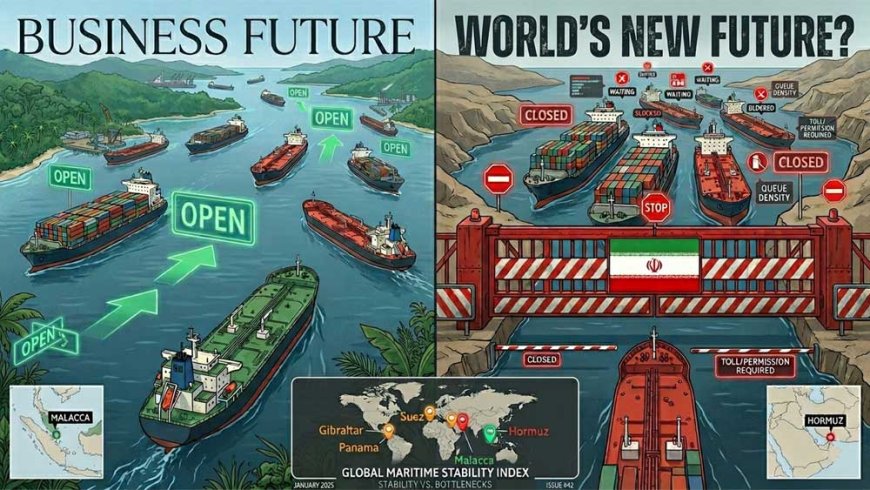
A Dangerous Precedent for Global Navigation
On April 10, 2026, as the world watches with apprehension the peace negotiations between the United States and Iran in Islamabad, an issue emerges that could redefine the rules of international maritime trade: the Iranian proposal to impose tolls on transit through the Strait of Hormuz.
This scenario, which until a few weeks ago would have seemed like political fiction, today represents one of the most serious challenges to the principle of freedom of navigation enshrined in international law.
The Context: A War that shifts the conflict from Air to Economy
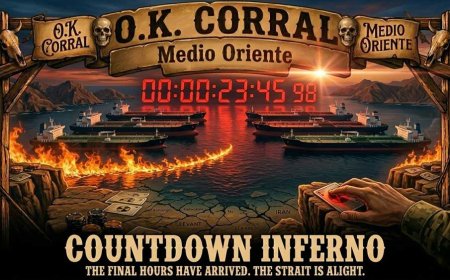
The current crisis has immediate roots in the military conflict that erupted on February 28, 2026, when Israel launched the first attack against Iran. After weeks of US and Israeli aerial bombardments, Tehran responded by effectively closing the Strait of Hormuz, thereby transferring the theater of operations from the military domain to the economic one.
The closure immediately generated inflationary pressures on global energy prices. Despite the United States being energy self-sufficient, global commercial interdependence still exposes the American economy to price increases resulting from heightened logistical costs.
On April 9, 2026, President Trump announced a two-week ceasefire and the opening of peace negotiations. However, the strait remains effectively closed: hundreds of oil tankers are still waiting to transit, with nearly 20,000 sailors blocked in the Persian Gulf according to the International Maritime Organization (IMO) .
The Toll Proposal: figures and modalities
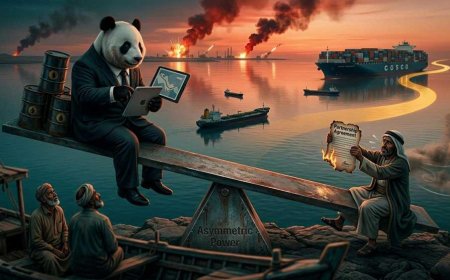
According to reports from the Financial Times, Iran is demanding $1 per barrel of oil transported, with payment in cryptocurrency. An Iranian parliament member mentioned figures of approximately $2 million per vessel.
The American oil industry estimates that the toll, combined with additional insurance costs, could add $2.5 million per shipment .Iran has already begun collecting these tolls in recent weeks, using Larak Island as a control point. According to MarineTraffic data, at least 22 ships have transited the strait since the ceasefire announcement, but traffic remains far from normal levels .
The Legal Framework: UNCLOS and Freedom of Transit
The Iranian proposal clashes head-on with International Maritime Law. The United Nations International Maritime Organization has stated that imposing a toll on the Strait of Hormuz "would create a dangerous precedent".
According to the United Nations Convention on the Law of the Sea (UNCLOS) — which the United States, ironically, has not ratified while Iran has — all vessels enjoy the right of transit through straits used for international navigation. Article 44 is clear: "States bordering straits shall not hamper transit [...] There shall be no suspension of transit".
Professor Jason Chuah, maritime law expert at City St Georges University of London, emphasizes that "such a toll flies in the face of the right of transit or innocent passage through natural straits" and "could create a bad precedent for other parts of the world — including the Strait of Malacca, the Strait of Gibraltar, and Bab El-Mandeb" .
The Position of Allies: Singapore and the United Kingdom
Two key US allies have expressed firm opposition to the Iranian proposal, though with a potentially contradictory economic interest.
The United Kingdom, through Foreign Secretary Yvette Cooper, declared: "Freedom of navigation means navigation must be free. This applies right across the globe. It's crucial for the global economy". Defense Secretary John Healey added that the introduction of "pay-for-passage tolls" would create "a potential principle that could be used and abused by others elsewhere".
Singapore, the island nation that dominates the narrowest point of the Strait of Malacca (less than 2 nautical miles compared to 21 in the Strait of Hormuz), has adopted a similar position. Foreign Minister Vivian Balakrishnan told Parliament: "International law and UNCLOS is the constitution of the oceans, and this is a right — freedom of navigation is a right and not a privilege".
He explicitly ruled out negotiations on tolls with Tehran, stating that doing so "would be implicitly eroding this legal principle".
However, both nations could theoretically benefit from a precedent that legitimizes tolls on strategic maritime corridors.
Trump's Position: Between Contradictions and Opportunities
The Trump administration's position is characterized by significant ambiguity. On one hand, the President recently declared on Truth Social: "There are reports that Iran is asking for tariffs on oil tankers going through the Strait of Hormuz — They shouldn't be doing that and, if they do, they'd better stop immediately!".
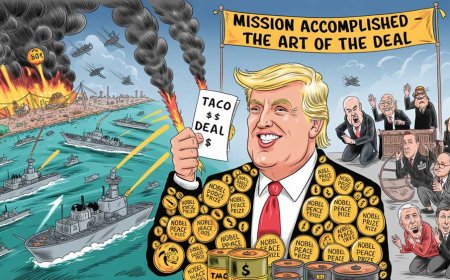
On the other hand, just days earlier Trump had told ABC News he was considering a "joint venture" operation with Iran for joint toll management: "We're thinking of doing it as a joint venture. It's a way of securing it — also securing it from lots of other people. It's a beautiful thing".
White House spokesperson Karoline Leavitt confirmed that the idea of sharing toll revenues with Iran is "an idea that the president has floated" and that "will continue to be discussed over the next two weeks" .
The Global Economic Impact: Who Really Pays?
Economic analysis of the toll reveals a counter-intuitive aspect: according to the Bruegel think tank, 85% of the toll cost would fall on Gulf oil-exporting states, while the rest of the world would bear only a small fraction.
The reasoning is that the toll acts as a tax on the bottleneck, and those who control the scarce resource (Gulf oil) must absorb most of the cost to maintain competitiveness.
However, the American oil industry sees the issue differently. Beyond the $2.5 million additional cost per shipment, they fear above all the precedent effect: if Iran obtains the right to collect tolls, other nations could follow suit.
Singapore could impose tolls on the Strait of Malacca, Turkey on the Bosporus, creating a global system of "taxation" on maritime routes that could increase transport costs by 15-25%.
The Five Most Important Straits in the World
To understand the scope of the risk, it is useful to consider the main global maritime bottlenecks:
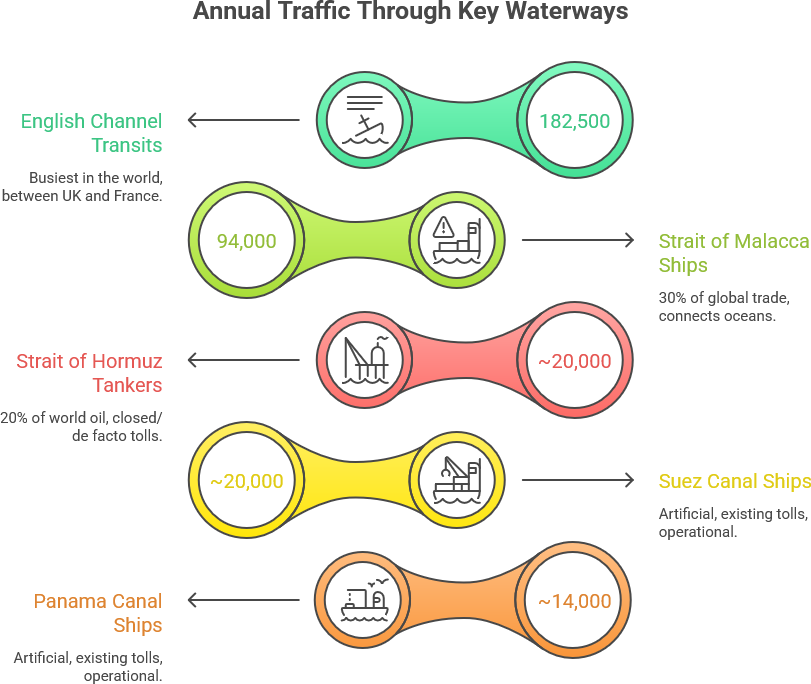
Tolls already exist for Suez and Panama, but these are artificial canals requiring constant maintenance. The other straits are natural geographic formations, and their free passage is a pillar of international commerce.
The Evolving Scenario
Today (April 10, 2026), the situation remains fluid:
- The ceasefire is fragile, with Israel continuing bombardments in Lebanon against Hezbollah
- Vice President JD Vance is traveling to Islamabad to lead American negotiations
- The Strait of Hormuz remains technically closed, with traffic reduced to a minimum
- Iran has announced "alternative routes" through the strait, citing the risk of naval mines
Iranian Supreme Leader Mojtaba Khamenei has declared that Iran will "bring the management of the Strait of Hormuz into a new phase" during negotiations, confirming that control of the strait is a central point of Iranian strategy.
A Crossroads for International Law
The Strait of Hormuz crisis represents far more than a bilateral dispute between the United States and Iran. It is a crucial test for the rules-based international order that has governed maritime commerce for decades.
If Iran obtains the right to impose tolls on a natural international strait, the door will open to a fragmentation of the global navigation system. Every nation that controls a strategic bottleneck — from Morocco overlooking the Strait of Gibraltar to Indonesia towering over the Sunda Strait — could claim the same privilege.
As British Defense Secretary Healey observed, the risk is not only economic but systemic: it is about preventing the creation of "a potential principle that could be used and abused by others elsewhere".
The international community today faces a difficult choice: accept a compromise that normalizes tolls on Hormuz to restore global energy flows, or maintain the principles of the law of the sea risking a prolonged economic crisis.
Whatever the outcome, the consequences will be felt for decades in how the world trades across its seas.
What's Your Reaction?