














China and Iran: An Alliance that doesn't exist
Analysis of China-Iran relations revealing an asymmetric, transactional partnership rather than a strategic alliance. Beijing prioritizes economic stability and oil supplies over military commitments, viewing Iran as a risky commercial partner rather than an ally
Why Beijing is not the ally Tehran wishes it had
When the United States and Israel launched their attacks against Iran in February 2026, China's reaction was what we have come to expect: expressions of "concern", appeals for cessation of hostilities, and condemnation of violations of international law.
But pay attention: Beijing did not condemn the attacks on their merits, nor did it take a position to defend Iran as an allied power. And in parallel, China also expressed concern about Iranian attacks against American bases in Bahrain, Qatar, and the United Arab Emirates.
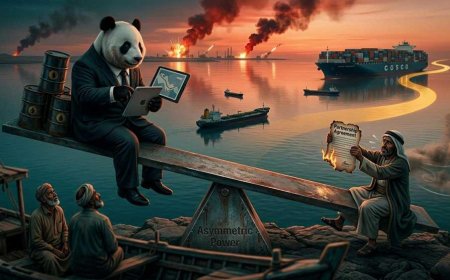
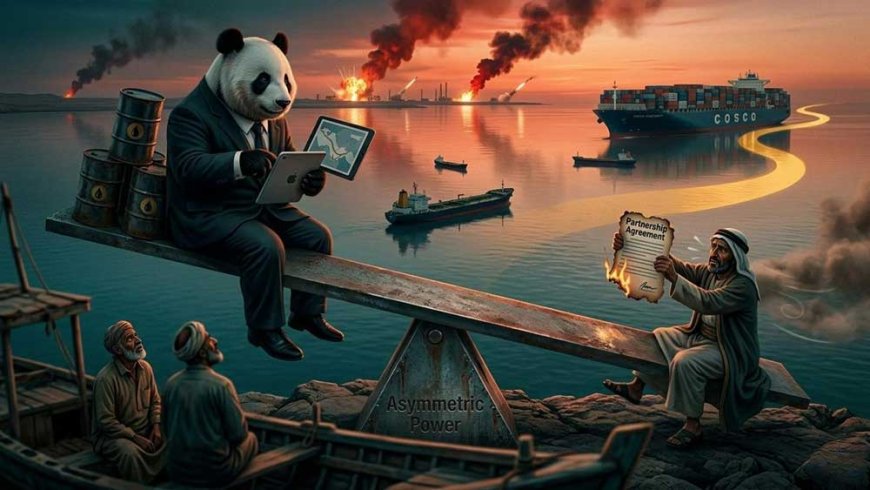
This double register is not accidental. It represents the essence of a profoundly asymmetric relationship, where Iran needs China much more than China needs Iran.
A Commercial Partner, Not a Strategic One
It is true that China is Iran's main trading partner and purchases about 90% of Iran's exported oil. But the numbers tell another story: Tehran represents less than 1% of total trade for the world's second-largest economy, while Iranian oil covers only 13-14% of China's maritime energy imports.
China signed a 25-year strategic cooperation agreement with Iran in 2021, but the reality is much more modest than the announcements: Chinese investments in the country have been contained, lower than those made in other regional countries.
Beijing has systematically avoided formal military commitments, preferring to limit itself to trilateral exercises with Russia and Iran or multilateral exercises under the Shanghai Cooperation Organization.
Fear of Chaos, Not Love for Iran
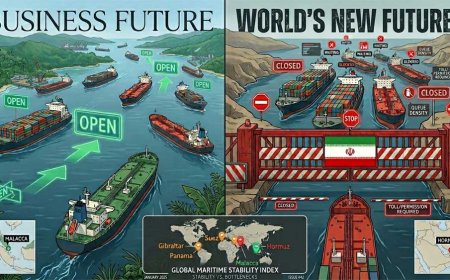
China's real concern is not saving the Iranian regime, but avoiding regional chaos. The Strait of Hormuz, which Iran has threatened to close, is a vital artery: about 20% of world oil and over 30% of global LNG trade passes through it.
For Beijing, which imports 52% of its oil from the Persian Gulf, a prolonged closure would represent enormous economic damage.
But there is more: Middle Eastern commercial routes are essential for the Chinese economy and the Belt and Road Initiative. A Middle East in flames puts at risk not only energy supplies but also the global trade infrastructure on which Beijing is building its economic expansion.
Attentive Spectator, Never Involved
Throughout the conflict, China behaved as an attentive but uninvolved spectator. It did not send troops, did not provide offensive weapons (except dual-use technologies and drone components), did not activate military alliances. It conducted "shuttle diplomacy" through its Special Envoy for the Middle East, but without ever openly taking sides.
This caution stems from a fundamental principle of Chinese foreign policy: "non-interference." Beijing wants to do business with everyone — from theocratic regimes to Western democracies — without having to justify or condemn the internal policies of its partners.
Going to war alongside Iran would mean breaking this balance, exposing itself to American sanctions, and compromising crucial relationships with Saudi Arabia and the United Arab Emirates.
Annoyance with the Theocratic That Won't Reform
There is an underestimated aspect of the bilateral relationship: China looks with increasing annoyance at Iran's theocratic approach. Beijing is living proof of how to move from political closure to economic opening guided by progress. Iran, instead, insists on prioritizing "dated revolutionary logics" over any reform that could open it to the world economically.
While China transformed its Maoist isolation into pragmatic opening oriented toward material well-being, Iran remains trapped in a narrative of "perpetual siege" that justifies internal repression and the parastatal control of the economy by the Revolutionary Guards.
This model, which assigns resources based on political loyalty rather than economic efficiency, is the opposite of the Chinese recipe.
For Beijing, Iran risks becoming a Middle Eastern copy of Cuba: a regime that privileges revolutionary rhetoric over economic development, remaining isolated and dependent on external aid rather than opening itself to authentic transformation.
Final thoughts
The China-Iran relationship is pragmatic, not sentimental. Beijing buys discounted oil, sells dual-use technologies, avoids sanctions through shadow trade networks. But when it comes to defending Iran militarily or diplomatically in a substantial way, China pulls back.
It is not a strategic ally, much less a military one: it is a discounted raw material supplier that Beijing manages with the same caution it applies to any other geopolitically risky commercial partner.
Iran wants a "Beijing-Moscow-Tehran axis" against the West.
China, instead, only wants the Middle East not to explode — because an explosion would damage its own economic interests first and foremost.
Everything else is diplomatic rhetoric.
What's Your Reaction?