

















AI Layoffs: China Says NO
Chinese court rules companies cannot fire employees solely to replace them with AI. Landmark 2026 decision sets precedent for labor rights in the age of automation.
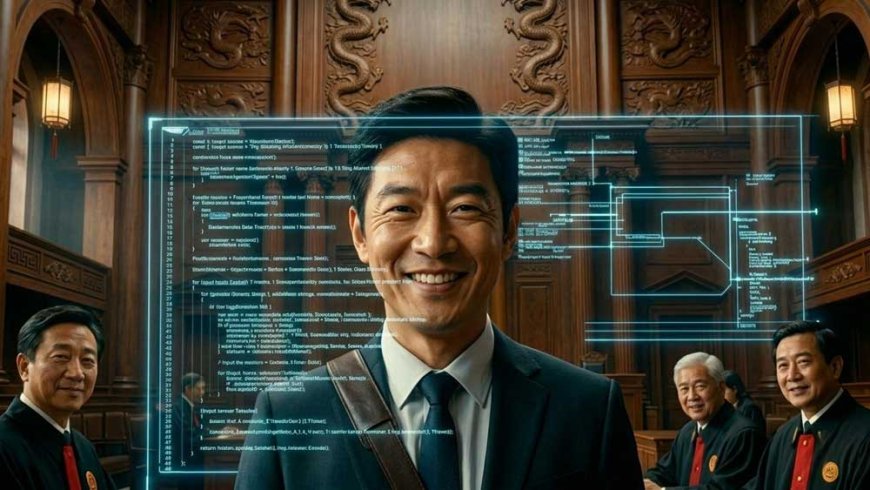
A Chinese court has set a historic precedent: companies cannot fire employees simply to replace them with artificial intelligence.
The ruling that changes the game
Hangzhou, April 2026. A Chinese court has just written an important chapter in the history of digital labor. The rule is simple: you cannot fire someone just because a machine can do their job.
The Hangzhou Intermediate People's Court confirmed that adopting AI is a business decision, not a legal justification for getting rid of employees.
What actually happened in the case
Zhou (surname only) was hired in November 2022 as a Quality Assurance Supervisor for a large language model (LLM). He earned 25,000 yuan per month (around $3,655).
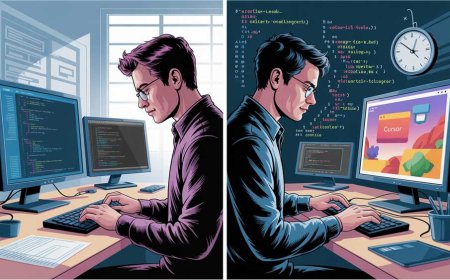
His job? Verify that the AI produced accurate responses, filter inappropriate content, and match user queries to the right answers.
Then automation arrived. The company started using AI to do exactly what Zhou was doing. The result? They offered him a different role: same company, lower level, salary cut to 15,000 yuan. That's a 40% pay cut.
Zhou said no. The company fired him.
The court ruled in Zhou's favor. Twice: first at the district level, then on appeal.
Why this ruling matters
1️⃣ AI is not "force majeure"
Many companies thought: "We install AI, cut staff, save money." The court made it clear: no. Automation is a strategic business choice—not an unpredictable event like an earthquake or a pandemic.
2️⃣ Companies must own their responsibilities
If you invest in AI to save costs, those savings cannot come at the expense of your workers. You must find alternative solutions: reassignment to equivalent roles, training, upskilling.
3️⃣ You cannot offer "choices" that aren't real
Proposing a job with a 40% pay cut and calling it "reasonable reassignment" doesn't hold up. Courts see it for what it is: a way to push the worker out the door.
A precedent with roots
This isn't the first case of its kind in China. In December 2025, a Beijing court already established the same principle for Liu, an employee since 2009 whose data-entry role was automated.
The message is clear: Chinese jurisprudence is moving in a precise direction. Technology advances, but workers' rights do not retreat.
The legal core
In China, you can only terminate employment for specific reasons: mutual consent, misconduct, incompetence, or a "significant objective change in circumstances" that makes the contract impossible to fulfill.
The Court ruled that adopting AI is a business choice—not an unpredictable catastrophe like an earthquake or regulatory crisis. Therefore, it does not qualify under the "objective change" clause.
Translated: If you want the robots, you keep the people too.
What companies must do now
The Court outlined legal alternatives:
- Retrain affected workers
- Reassign them to reasonable roles with fair compensation
- Invest in upskilling programs
The stated goal: AI should "liberate labor and promote employment"—not replace it at workers' expense.
✅ Before automating, assess the human impact
✅ Offer training and requalification
✅ Propose real reassignments—not traps
✅ Negotiate with employees, don't impose
❌ Don't use AI as an excuse to cut staff
❌ Don't treat automation as "force majeure"
❌ Don't shift business risks onto workers
The bigger picture
China is one of the world's leaders in AI development. Yet with this ruling, it sends a clear message: innovation cannot trample rights.
This is a signal to all companies, in China and beyond: technological transition must be managed responsibly. You cannot simply "replace" people with machines and walk away.
Technological progress is inevitable. Exploitation is not.
Why this matters globally
While the West is still debating whether—and how—to regulate AI's impact on labor, China has already decided. And it decided on the side of workers.
The precedent is clear: technology moves forward, but rights remain. If you want to automate, you must also take responsibility for the transition. You cannot just fire people and blame the algorithm.
What's Your Reaction?