





OpenAI Kills Sora: The Billion-Dollar Bet That Failed
OpenAI shuts down Sora AI video app after 6 months, killing $1B Disney deal. Analysis of Sora 1 vs Sora 2 versions, market impact, and why AI video generation failed commercially despite technical advances.
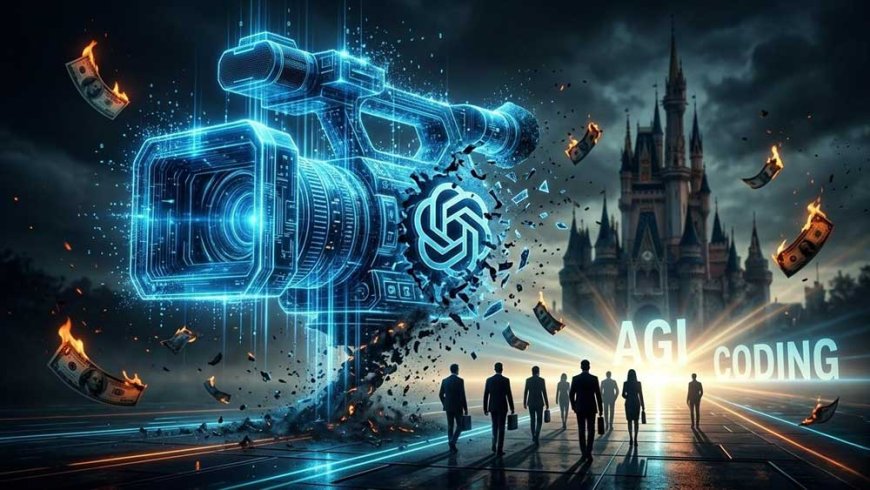
OpenAI has decided to kill Sora, its AI video generation app, just six months after launch. The news dropped on March 24, 2026, with a blunt announcement on X: "We're saying goodbye to Sora." No detailed explanation, just a promise to share "timelines for the app and API."
But behind this shutdown lies far more than a simple product removal. It's the failure of a billion-dollar bet with Disney, an admission of a costly strategic error, and a strong signal of where OpenAI is really heading.
What Was Happening: Sora 1 vs Sora 2
Before understanding why it died, you need to understand what it was. OpenAI had launched two distinct versions of its video model:
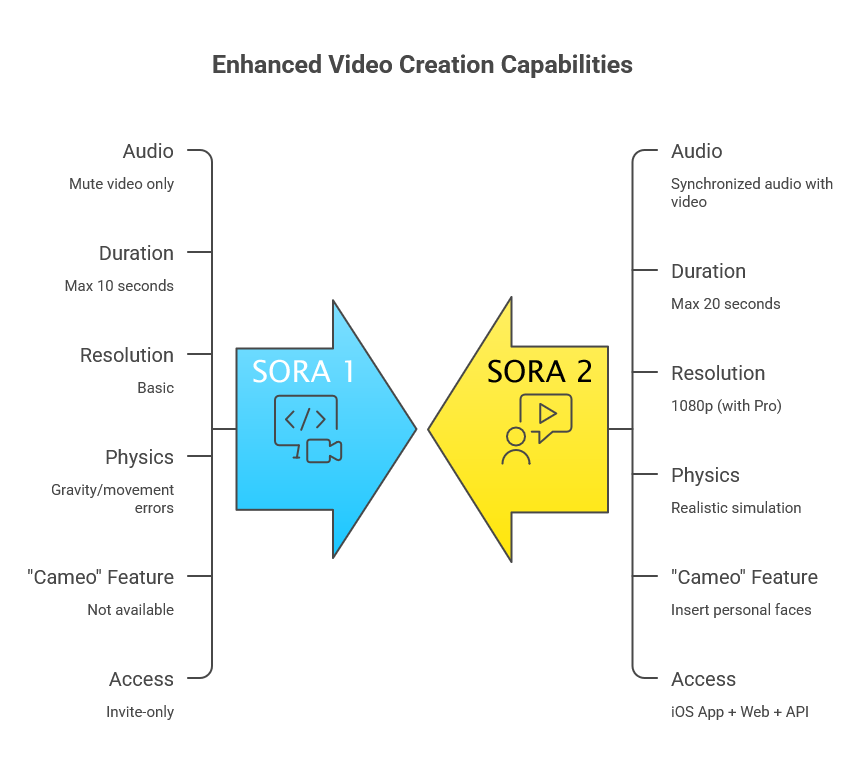
Sora 2, launched in October 2025 , represented a significant technological leap: videos with integrated audio, realistic physics, and the ability to insert yourself into generated videos ("Cameo"). It was technically impressive.
But technically impressive doesn't mean commercially sustainable.
Why It Died: The Numbers That Didn't Add Up
According to the Wall Street Journal, Sora was burning through roughly $1 million per day in computational costs. And not because it was popular: after a peak of 3.3 million downloads in November 2025, users had crashed to under 500,000. By February 2026, downloads had fallen to 1.1 million, in steady decline. The app had generated only $2.1 million from in-app purchases over its lifetime . A drop in the bucket compared to the costs.
OpenAI had to choose: continue supporting a product that consumed massive resources with no return, or redirect that "compute" toward more profitable areas like coding (where Anthropic's Claude was eating ground) and enterprise.
The choice was clear: Sora must die.
The Disney Deal Collapse: A Billion Dollars Up in Smoke
The real drama isn't technological—it's commercial. In December 2025, Disney had announced a $1 billion deal with OpenAI, with licensing to use Marvel, Star Wars, and Pixar characters on Sora . The goal was to integrate the technology into Disney+.
Disney was notified of the shutdown less than an hour before the public announcement. The deal died before it could even begin.
Disney released a diplomatic statement: "We respect OpenAI's decision to exit the video generation business".
This isn't just a failed contract. It's a crisis of trust: if OpenAI can kill a key product after just 6 months, with a strategic partner that invested a billion, what does that mean for other deals?
Version Comparison: What Killed Sora?
Sora 1: The Prototype (2024-2025)
- Problem: Mute videos, faulty physics, limited access
- Fate: Removed March 13, 2026, before the total shutdown
- Verdict: Never took off as a mass-market product
Sora 2: The "Final" Product (October 2025 - April 2026)
- Promise: Synchronized audio-video, 1080p quality, social features
- Reality: Prohibitive costs, impossible moderation, wild deepfakes
- Fate: App shutdown April 26, 2026, API until September 24, 2026
The difference between the two versions was technical, but the problem was the same: nobody really wanted a social network of purely AI-generated videos. Users generated bizarre content (Sam Altman in a pig slaughterhouse, Mario smoking weed, deepfakes of famous characters) but weren't building a community.
Market Impact: Who Benefits?
1. Google: The New King of AI Video
With Sora out of the game, Google remains the only giant with large-scale video generation capabilities. It has no deals with IP holders (and is actually being sued by some), but now has a clear field.
2. Anthropic: The Real Winner
While OpenAI burned resources on Sora, Anthropic focused everything on Claude and coding tools. Result: it's dominating the enterprise sector and developers. The Sora shutdown is an admission that OpenAI wasted precious time.
3. Specialized Competitors
Companies like Runway, Luma, Moonvalley, Kling, and ByteDance (Seedance) now face less pressure from Sam Altman's giant. Disney itself might turn to them to replace the OpenAI deal.
4. Users: Lost and Angry
Those who invested time and money in Sora must export their content before April 26, or risk losing it. Creators who built audiences on the platform find themselves without ground beneath their feet.
The Uncomfortable Truth: AI Video Is Too Expensive
Sora's fundamental problem wasn't technology—it was economics. Video generation requires immense computational resources compared to text or code. Every generated video consumed precious GPUs that OpenAI needs to use elsewhere .With the company preparing for a potential IPO and having just raised another $10-110 billion (figures vary between sources) , it couldn't afford to keep alive a product that was bleeding money.
Fidji Simo, OpenAI's CEO of AGI deployment, reportedly told employees: "We cannot lose this moment because we're distracted by side missions" .
What Happens Now?
- Sora 2 remains available within ChatGPT for Plus/Pro subscribers, but as a feature, not a standalone product
- The API will close on September 24, 2026
- OpenAI is focusing on: coding, robotics, "world simulation" for research, and AGI
A Necessary Failure
The cancellation of Sora isn't the end of AI video. It's the end of the illusion that you can build a social network on entirely AI-generated content without a sustainable business model.
OpenAI got its timing and priorities wrong. It launched an extremely expensive app in a market that wasn't ready, lost a billion dollars in potential Disney investment, and allowed Anthropic to conquer the enterprise sector.
The message is clear: in AI, being "technologically ahead" isn't enough. You need to be economically sustainable. And Sora 2, however impressive, wasn't.
What's Your Reaction?