





















Phone bans don't raise test scores, but they make kids feel better. And maybe that matters more
A Brookings Institute study reveals that strict school cellphone bans don't improve standardized test scores, but significantly boost student well-being, challenging policymakers to rethink what "success" in education actually means Analysis of new research showing U.S. schools with phone-free classrooms see no academic gains but report reduced anxiety and better mental health among students, arguing that presence matters more than performance metrics.
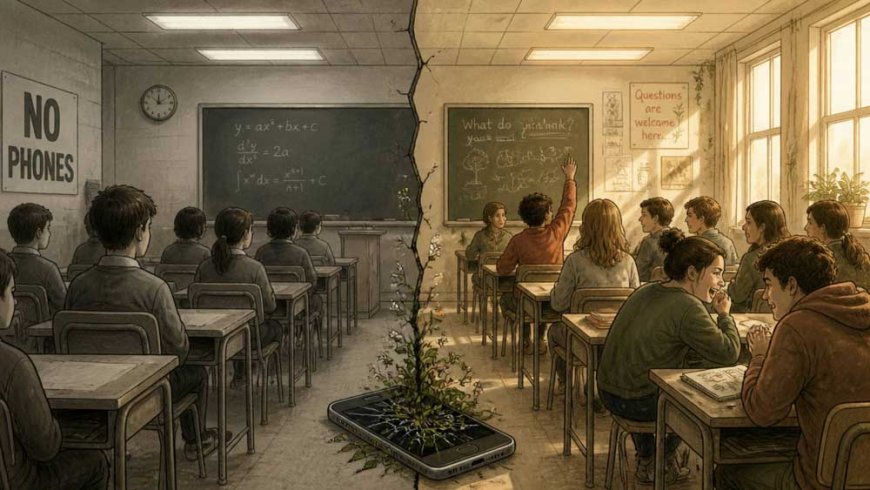
The Brookings Institute study is a slap in the face to anyone who thought banning phones would turn mediocre students into geniuses. The numbers are clear: prohibiting cellphones in class does not produce a statistically significant rise in standardized test scores. Zero. Nothing. Teachers who thought they were discipline heroes woke up to the same results as before.
But there's a massive "but."
Students feel better. Less anxiety, less FOMO, less toxic social comparison, more present-moment attention. And here the conversation flips: maybe we've been measuring the wrong thing for years. Standardized tests measure short-term memory and structured problem-solving ability. They don't measure mental health, resilience, or the capacity to sit in a room without needing a dopamine hit every 30 seconds.
The real problem isn't the phone. It's what we've normalized.
We've built an education system where kids spend 6-8 hours a day in a hyper-regulated, boring, often meaningless environment, and then we're shocked they seek escape in a screen. The ban is a band-aid, not a cure. Take away the phone, the kid is still bored. They just don't have a pressure valve anymore.
And yet, the ban has merit: it creates space.
Space for discomfort, for boredom, for sustained attention. Things that kids today — and many adults — have forgotten how to do. Boredom is a muscle: if you don't use it, it atrophies. A phone ban is forced training. It doesn't make you smarter, but maybe it makes you more human.
The lesson for policymakers?
Stop selling bans as magic solutions for grades. They're mental hygiene tools. And if you really want kids to learn more, change what happens in class, not just what happens in their pockets.
A boring teacher without phones is still a boring teacher. But a good teacher with actually present students, truly present, has one more chance.
Maybe the ban works, but not for the wrong reasons you made up. It works because it removes a legal drug from reach, not because it turns school into Hogwarts. And maybe, for a generation that's literally going insane, that's already enough.
What's Your Reaction?