





















Tencent Bets on AI: Meet "Xiao Wei," the AI Assistant Integrated into WeChat
Tencent launches grayscale testing of Xiao Wei, an AI assistant integrated into WeChat with 1.4 billion users. Powered by Hunyuan and DeepSeek models, it aims to transform the super app into an intelligent task orchestrator. Analysis of the three-way AI race in China: Tencent vs ByteDance (Doubao) vs Alibaba (Qwen), with record $4.4B AI capex and strategic implications for the global tech market.
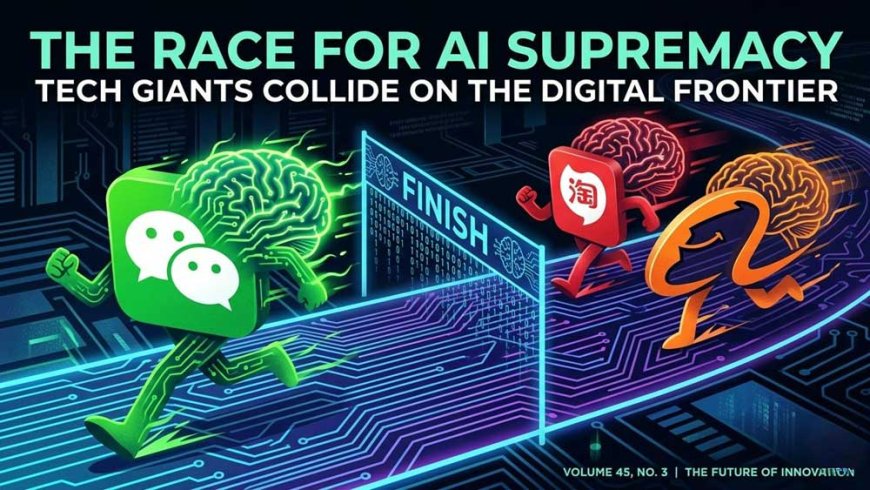
Tencent has begun testing Xiao Wei, a new AI assistant embedded directly into the WeChat app. The goal? To prevent ByteDance and Alibaba from running away with China's AI race.
What Changes for Users:
WeChat has 1.4 billion monthly active users — a number no other app in the world can match. Integrating Xiao Wei means this massive user base will be able to interact with artificial intelligence without downloading additional apps, creating new accounts, or leaving the ecosystem they already use every day for messaging, payments, bookings, and work.
The assistant combines Tencent's proprietary models — specifically Hunyuan (Tencent's in-house large language model, an evolution of the earlier WeLM) and high-quality open-source models, including DeepSeek. This "hybrid" strategy allows Tencent to balance performance, cost, and data control: proprietary models for core functions and sensitive data, open-source models for specific tasks and to reduce dependency on external providers.
Initial features include: sending messages, initiating calls, adjusting app settings.
But the real revolution will come in the next phase: navigating mini-programs via voice or natural language text commands. Imagine saying: "Book me a table for two at 8 PM at the Japanese restaurant near the office" and watching WeChat autonomously handle the search, availability check, booking, and payment — all without ever leaving the chat.
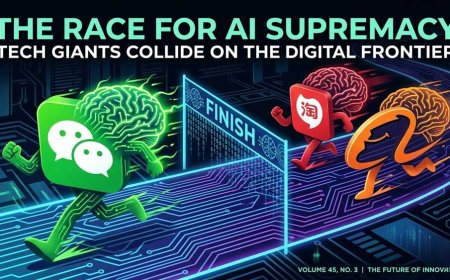
The Strategic Context: A Three-Way Race
China's consumer AI market has become a battlefield with no holds barred.
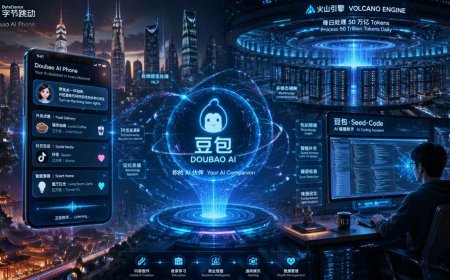
ByteDance launched Doubao and surpassed 340 million monthly users, quickly becoming the most popular AI app in China. Doubao's success is built on integration with the TikTok/Douyin ecosystem and an aggressive pricing strategy, with premium features offered at extremely competitive costs.
Alibaba responded with Qwen, demonstrating the strength of its ecosystem during Chinese New Year 2026: the AI handled over 200 million orders on Tmall, Taobao, and related services, processing natural language queries for search, recommendations, and real-time customer support. A real-world stress test that validated the technical architecture and model reliability.
Tencent, traditionally more cautious in adopting new technologies, has drastically accelerated. In Q1 2026, it recorded a record capex of 31.9 billion RMB (approximately $4.4 billion USD), almost entirely dedicated to AI infrastructure: data centers, GPUs, foundational model research, and engineering talent. It's a clear signal: Tencent does not intend to fall behind.
Meanwhile, Yuanbao — Tencent's standalone app launched as a direct response to Doubao — has reached 100 million users. But Yuanbao is just one piece. The real bet is WeChat as a universal "intelligent hub."
Why this move matters: The "Connecting Layer" Theory
Tencent is not trying to win the technical race for foundational models — a battle where DeepSeek, Alibaba, and even startups like Zhipu AI have demonstrated excellence. Tencent's strategy is different: become the "connecting layer," the interface between users and services.
If Xiao Wei's integration works as planned, WeChat will transform from a "super app" (a container of services) into an "intelligent task center" (an orchestrator of actions). The distributional advantage is enormous: no competitor can replicate an audience of 1.4 billion active users who already use the app for hours every day.
The technical challenge, however, is equally enormous. Coordinating millions of mini-programs — developed by third parties with different standards — with natural language commands requires:
- precise semantic understanding of user intent
- secure orchestration of APIs across disparate services
- real-time management of payments, personal data, and financial transactions
- compliance with China's strict data and AI regulations
The test is currently in "grayscale" phase — rolled out to a select group of users to evaluate performance, stability, and feedback before a national rollout. This is standard practice for Tencent, which has always prioritized technical caution over speed to market.
Global Implications
For those observing the tech market from Europe or the United States, the lesson is clear: China is building a vertical, integrated AI ecosystem, where language models are not standalone chatbots but engines of an already-existing digital infrastructure. WeChat with Xiao Wei could become the world's first example of an "AI-native super app" — not an app that added AI, but an app redesigned around AI.
The open question is: will it work? The average WeChat user is accustomed to a visual interface, taps and swipes. The shift to a dominant conversational interaction is a cultural change, not just a technological one. Tencent knows this, which is why it is proceeding with caution — but with determination.
What's Your Reaction?